
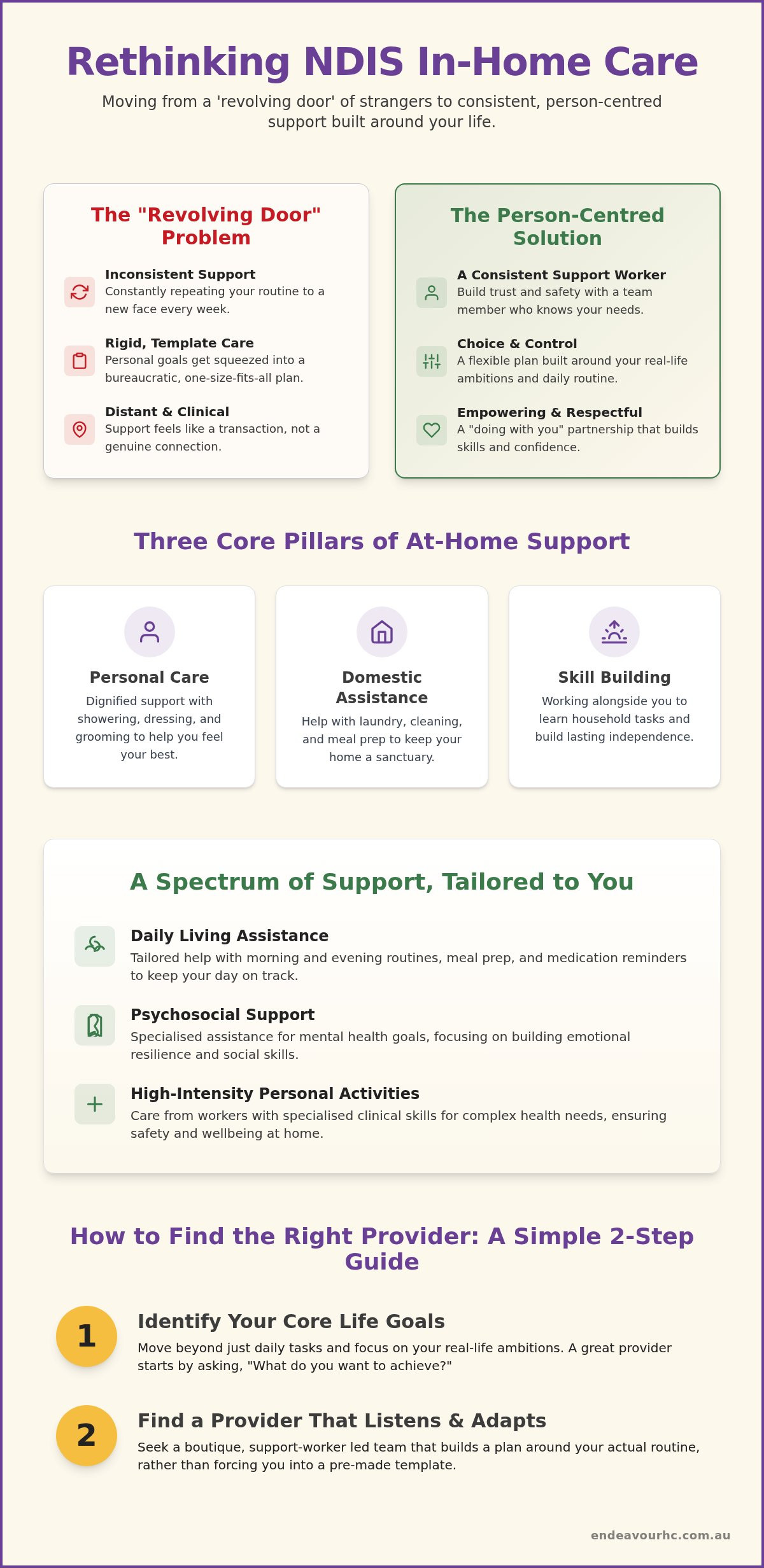
Why does the NDIS often feel like a revolving door of strangers rather than a support system built for your actual life? It's incredibly frustrating to spend your energy repeating your routine to a new face every week, or to feel like your personal goals have been squeezed into a rigid, bureaucratic template. You want to feel safe and understood in your own space, yet many large providers treat NDIS in-home care like a simple transaction.
We believe you deserve better than a "one size fits all" approach. This guide will help you discover how to find NDIS in-home care that truly values your choice and control, ensuring you get the consistent, person-centred support needed to thrive. We'll walk through the steps of moving away from clinical, distant care and toward a plan built around your real-life ambitions. From understanding the latest 2026 pricing schedules to choosing a team that listens, you'll learn how to reclaim your independence at home with a support worker who actually knows your name and your routine.
Key Takeaways
- Understand how ndis in home care fits into your Assistance with Daily Life funding to help you maintain independence in your own residence.
- Learn why having a consistent support worker is vital for your safety and well-being, helping you avoid the frustration of a rotating roster of strangers.
- Explore the differences between standard personal care and specialised psychosocial support for mental health-related goals.
- Discover a simple two-step process for identifying your core life goals and finding a provider that actually specialises in the support you need.
- Find out how a boutique, support-worker led approach can replace rigid template care plans with support built around your actual daily routine.
What is NDIS In-Home Care and How Does it Support You?
Your home is more than just a building; it's the place where you feel most like yourself. Choosing ndis in home care means bringing professional support into that personal space to help you live as independently as possible. Rather than moving into a clinical setting or a group home, this type of support allows you to stay connected to your local community, your pets, and your familiar routines. It's a highly personalised service designed to bridge the gap between what you can do today and what you want to achieve tomorrow.
Within the framework of the National Disability Insurance Scheme (NDIS), in-home support typically falls under the "Assistance with Daily Life" budget. This funding is flexible, meaning it's meant to adapt to your specific needs. At Endeavour Healthcare, we believe the best support isn't about a worker coming in to "do for" you while you sit on the sidelines. It's about "doing with" you. This partnership approach ensures that every visit is an opportunity to build your confidence and refine the skills you need to manage your own household.
The Core Pillars of At-Home Support
Support at home isn't just one thing; it's a collection of practical tasks that keep your life running smoothly. We focus on three main areas to ensure you feel supported and empowered:
- Personal care: This involves sensitive help with showering, dressing, and grooming. We prioritise your dignity, ensuring you feel comfortable and respected throughout your morning or evening routine.
- Domestic assistance: Keeping a house tidy can be a heavy lift. Support workers help with laundry, cleaning, and meal preparation so your home remains a sanctuary rather than a source of stress.
- Skill building: This is the heart of independence. We work alongside you to help you learn how to manage household tasks, from using the washing machine to planning a weekly grocery shop.
Who is Eligible for In-Home NDIS Support?
Securing funding for ndis in home care depends on whether the support is considered "reasonable and necessary" for your specific situation. The NDIA looks at how your disability impacts your functional capacity, essentially asking if the support will help you reach your goals or participate more fully in life. Your primary disability plays a major role here, but the specific level of support is usually determined through a functional capacity assessment. This assessment, often conducted by an Occupational Therapist, provides a clear picture of the physical or psychosocial barriers you face daily. Having a detailed assessment is the best way to ensure your plan includes enough hours to provide consistent, reliable care that actually meets your needs.
Types of Disability Support Services Available at Home
Every person's journey is unique, so the help you receive should be too. The NDIS categorises supports to ensure you get the right level of assistance for your specific situation. This ranges from standard daily assistance to high-intensity daily personal activities, which require workers with specialised clinical skills to manage complex health needs such as ventilator management or complex wound care. Understanding these NDIS Home and living supports helps you advocate for a plan that truly reflects your daily reality and promotes long-term independence. Quality ndis in home care is about finding that perfect balance between professional clinical safety and the comfort of your own residence.
For participants living with mental health challenges, psychosocial support is a vital component of ndis in home care. It's not just about physical tasks; it's about building the emotional resilience and social skills needed to engage with the world again. This might involve a worker helping you manage anxiety while catching a bus or providing the steady encouragement needed to maintain a healthy routine. Transport assistance also plays a key role here. It ensures you aren't isolated and can attend medical appointments, visit the library, or join social groups without the stress of navigating public transport alone. This connection to the outside world is just as important as the support you receive inside your four walls.
Personal Care and Daily Living Assistance
Your morning and evening routines set the tone for your entire day. We provide tailored support that fits around your life, from medication reminders to health monitoring within the comfort of your home. Personal care is a respect-based service that honours participant privacy while providing the practical help needed for grooming and hygiene. This ensures you feel refreshed and ready to take on your goals, knowing your physical well-being is in safe, professional hands. Whether it's help with dressing or sensitive assistance with showering, the focus remains on your comfort and dignity at all times.
Domestic Assistance and Home Maintenance
A cluttered or unorganised home can be more than just an eyesore; it can be a safety hazard. Domestic assistance focuses on keeping your living space safe and healthy, which significantly reduces the risk of falls or hygiene-related issues. We also help with collaborative meal planning and grocery shopping, ensuring you have nutritious food that you actually enjoy eating. By taking the weight of heavy household chores off your shoulders, this support frees up your energy for the things that matter most, like visiting family or pursuing a hobby. If you're looking for a team that treats your home with the care it deserves, our boutique support team is here to help you get started.
The "Rotating Roster" Problem: Why Consistency Matters
Imagine waking up and not knowing which stranger will be walking through your front door today. For many people receiving ndis in home care, this isn't just a minor annoyance; it's a constant source of stress. Large agencies often treat support like a logistics puzzle, prioritising shift coverage over human connection. This "rotating roster" of workers can turn your sanctuary into a place of anxiety. It forces you to constantly repeat your story, explain where the tea is kept, and teach new people how to navigate your specific mobility or communication needs. It's exhausting, and it's not how support should feel.
Consistency isn't just a "nice to have" feature. It's a fundamental safety requirement. When a support worker knows you well, they notice the small things that a stranger would miss. They see when your mood dips or when a physical symptom seems slightly off. At Endeavour Healthcare, we take a different path. We're a support-worker led team, which means we understand that trust is the only foundation for effective disability support. We build small, dedicated teams around you so that every face is a familiar one. While the NDIS Pricing Arrangements ensure that costs remain within set limits, they don't guarantee the quality of the relationship. That's why we focus on the person, not just the roster.
Building Trust Through Relationship-Led Care
Knowing your routine reduces your mental load. If your worker knows you prefer quiet in the morning or that you have a specific way of organising your kitchen, the day flows naturally. Long-term relationships allow for a deeper understanding of your communication style, whether you use verbal language or subtle cues. This familiarity acts as an early warning system for your health. A worker who has been with you for months will spot a subtle change in your well-being that a stranger would miss entirely, allowing for quicker support and better health outcomes.
Avoiding the "Big-Box" Provider Trap
Large corporate providers often rely on "template" care plans. These are rigid documents that treat your life like a checklist of tasks to be ticked off. In contrast, a boutique provider offers the flexibility to adapt to your actual life goals. Because we're a small, local team, we don't have the bureaucratic layers that slow down communication. You aren't just a number in a database. You're a person with a unique story, and your care plan should reflect that. Choosing a support-worker led organisation means your support is designed by people who have actually done the work, not just people sitting in a boardroom.
How to Choose the Right NDIS Service Provider
Selecting a partner for your ndis in home care is one of the most significant decisions you'll make for your independence. It's about much more than just ticking boxes on a government form; it's about who you feel comfortable welcoming into your private sanctuary. Your first step should always be to get crystal clear on your core goals. Are you looking for help with the morning rush, or is your priority building the skills to manage your own grocery shopping? Once you know what you need, research providers who specialise in your specific disability type. A provider with a deep understanding of psychosocial support, for example, will offer a very different experience than one focused purely on physical mobility.
Don't be afraid to dig into the details during your research. You should actively interview potential providers about their worker turnover rates. High turnover is a red flag that usually leads to the "rotating roster" of strangers we discussed earlier. You also need to verify that they have current NDIS worker screening clearances and a commitment to cultural responsiveness. Finally, take a close look at their service agreement. A fair agreement should offer flexibility and reasonable notice periods, ensuring you aren't locked into a situation that no longer serves your needs.
Key Questions to Ask During an Intake Meeting
The intake meeting is your chance to see if the provider's values match your own. Use these questions to gauge their commitment to consistent, person-centred care:
- "How do you ensure I see the same support workers each week?" Consistency should be a strategy, not an accident.
- "How do you involve me in the selection of my support team?" You should have the final say on who enters your home.
- "What is your process for handling feedback or changing my care plan?" You need to know that your voice will be heard if things aren't working out.
Understanding Service Agreements and Pricing
Service agreements can feel like a maze of fine print, but they're vital for protecting your choice and control. Providers must follow the NDIS Pricing Schedule, which sets the maximum limits for supports. When reviewing the document, look closely at how the provider charges for worker travel and administration. These costs should be transparent and discussed upfront to avoid hidden surprises in your budget. Remember, the NDIS is built on the principle that you have the right to end or change a service if it's not meeting your expectations. If you're ready for a provider that puts your goals first, reach out to our friendly team at Endeavour Healthcare today to see how we can support your journey.
Endeavour Healthcare: Person-Centred Care Built Around You
Endeavour Healthcare isn't your typical large-scale provider. We're a boutique, support-worker led organisation that believes the best support happens when the system gets out of the way of the person. Our philosophy is simple: we build care around your real life rather than forcing you into a bureaucratic template. We know that ndis in home care is most effective when it feels like a partnership between you and a worker who truly understands your world. Whether you need help with personal care, daily living assistance, or accessing your local community, our focus remains on your dignity and your specific goals.
We're deeply committed to providing safe, respectful, and culturally responsive care for all Australians. This means we don't just show up to tick off a list of tasks. We listen to your story, respect your heritage, and ensure that our support aligns with your values. From transport to appointments to help with household chores, every service we offer is designed to keep you in control of your own journey. We aren't interested in being the biggest provider; we're interested in being the most dedicated one.
Our Commitment to Consistent Support
We solve the "rotating roster" problem by prioritising personality matches as much as skill sets. We know that inviting someone into your home is a big deal, so we work hard to find a support worker who shares your interests and respects your boundaries. Our founder, Manu, started this team with the belief that participants should always feel like people, not just NDIS numbers. By keeping our team small and focused, we maintain a high standard of personal care that larger corporate structures simply can't match. You'll see the same familiar faces, allowing you to build the trust that is essential for a successful support relationship.
Getting Started with Your Personalised Care Plan
Moving from an initial conversation to a fully functioning support team is a smooth and stress-free process with us. It starts with a simple, relaxed chat where we learn about your routine, your ambitions, and the specific hurdles you're facing. From there, we build a tailored plan that reflects your actual needs. We also work closely with your support coordinator to ensure your NDIS funding is maximised and used effectively to help you thrive. Our goal is to make the administrative side of care as invisible as possible so you can focus on living your life. Enquire today to see how we can support your independence and help you achieve your goals with a team that truly cares.
Take the Next Step Toward Your Independence
Finding the right ndis in home care is about more than just filling hours in a roster; it's about finding a team that respects your residence as much as you do. We've explored how consistent support workers build the trust necessary for true independence, and why moving away from bureaucratic "template" care plans is the key to reaching your actual life goals. By asking the right questions during intake and prioritising providers who value relationship-led care, you can turn your NDIS plan into a powerful tool for a better daily life.
At Endeavour Healthcare, we're proud to be a support-worker led team founded on the belief that everyone deserves a familiar face and a personalised approach. We don't do one-size-fits-all support. Instead, we focus on building long-term relationships that help you thrive in your own community. You aren't just a number to us; you're the person at the centre of everything we do.
Start your journey toward consistent, person-centred care with Endeavour Healthcare. You have the right to choose support that works for you, and we're here to help you navigate the process with confidence and care.
Frequently Asked Questions
What is the difference between in-home care and SIL (Supported Independent Living)?
In-home care is support provided in your current private home, whereas Supported Independent Living (SIL) is typically for participants with higher support needs who live in shared or specialised accommodation. While SIL often involves 24/7 onsite assistance, ndis in home care focuses on providing specific hours of support to help you live independently in your own residence. Endeavour Healthcare specialises in this personalised approach, ensuring you stay connected to your familiar community and routine.
Can I choose my own NDIS support worker with Endeavour Healthcare?
You absolutely have the final say in who supports you. We believe that a personality match is just as important as a skill match, so we involve you in the selection of your support team from the very beginning. This commitment to choice and control helps us build the long-term relationships that lead to better health outcomes. You deserve a worker who understands your communication style and respects your personal boundaries.
Does the NDIS pay for cleaners or gardeners under in-home care?
Yes, the NDIS can fund domestic assistance if your disability prevents you from performing these tasks yourself. This includes essential cleaning and garden maintenance needed to keep your home safe and accessible. These services are funded under your "Core Supports" budget. We help you manage these tasks so you can focus your energy on social participation and reaching your personal goals rather than worrying about household chores.
What happens if my regular support worker is sick or on holiday?
We prioritise consistency by building a small, dedicated team of familiar faces around you. If your primary worker is unavailable, we aim to provide a back-up worker who has already been introduced to you and understands your routine. This avoids the stress of having a complete stranger enter your home. Our support-worker led model ensures that even during staff holidays, your care remains personal, reliable, and respectful of your established preferences.
How do I add in-home support to my NDIS plan if it is not already there?
To add ndis in home care to your plan, you usually need to request a plan review or report a change in circumstances to the NDIA. You will likely need supporting evidence, such as a functional capacity assessment, to show why this support is reasonable and necessary. We often work alongside support coordinators to help participants gather the right documentation to demonstrate how in-home assistance will help them achieve their long-term independence goals.
Is in-home care only for people with physical disabilities?
Not at all. While many people use in-home support for physical tasks, it is equally vital for those with psychosocial, intellectual, or sensory disabilities. For example, we provide significant psychosocial support to help participants manage their mental health and build emotional resilience. Support might involve skill-building, such as learning to manage a budget or navigate public transport, rather than just physical help with showering or dressing.
How many hours of in-home support can I get per week?
The number of hours you receive is determined by the NDIA based on what they deem "reasonable and necessary" for your specific situation. There is no standard "one size fits all" number of hours. Your funding is calculated after looking at your goals, your current living situation, and the results of your functional assessments. We work with you to maximise this funding, ensuring every hour of support is used effectively to build your independence.
What is a culturally responsive support worker and why does it matter?
A culturally responsive worker understands and respects your unique background, including your heritage, values, and language preferences. This is vital because it creates a deeper sense of safety and trust within your own home. At Endeavour Healthcare, we ensure our team is trained to provide care that is sensitive to the diverse needs of all Australians. This approach ensures your support is respectful and truly aligned with how you choose to live your life.


